
Friedrich Burgmüller
Friedrich Burgmüller wrote short Romantic piano studies that combine clear technical goals with memorable titles, melodies and character, making them especially valuable for students.
Burgmüller studies feel like small pieces of music first and technical exercises second.
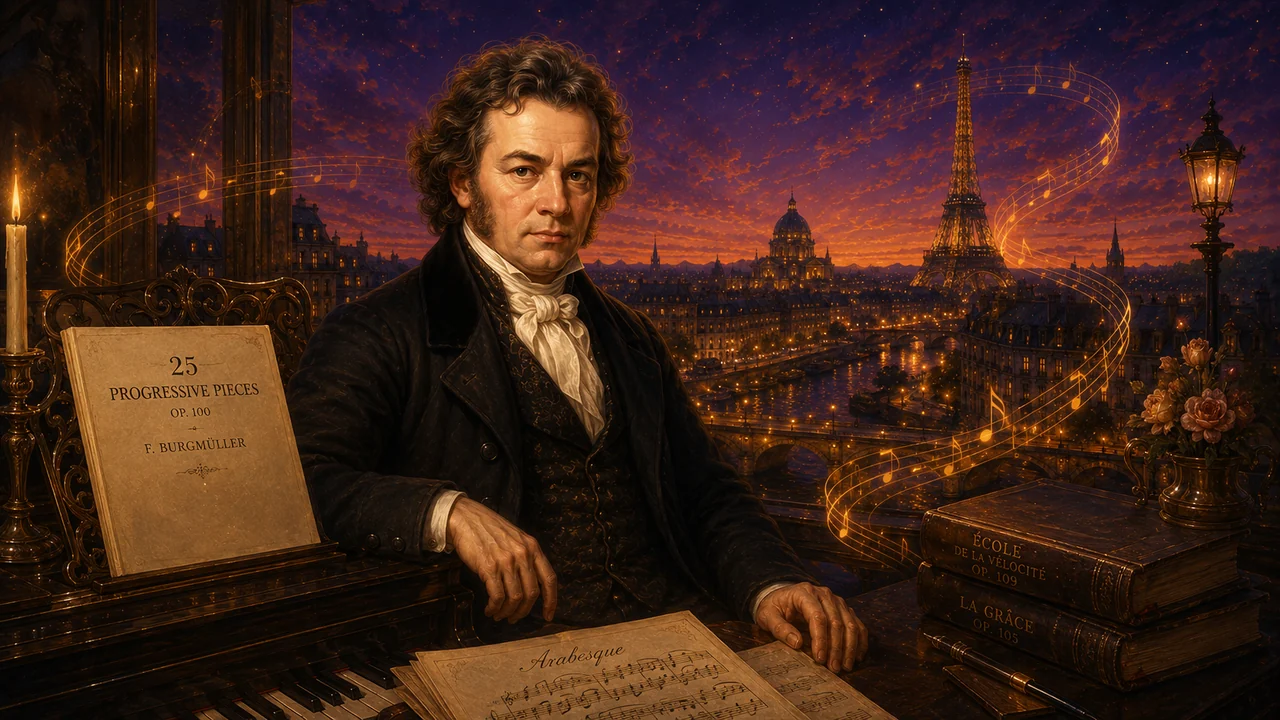
Life and Story
Friedrich Burgmüller was born in Regensburg in 1806 into a musical family. His father was a conductor and composer, and his brother Norbert also became a composer. Friedrich eventually settled in Paris, where he worked as a pianist, teacher and composer. Today he is best known for educational piano collections, especially the 25 Easy and Progressive Studies Op. 100. Pieces such as Arabesque, Ballade and The Storm each focus on particular technical challenges while also having a clear image or character. This combination made Burgmüller’s music unusually durable in teaching. He also wrote more advanced study collections and works for ballet and other genres. He died in 1874.
Musical Style
His studies use repeated-note patterns, broken chords, legato lines, staccato, quick hand movement and dynamic contrast. Titles encourage the player to connect technique with a musical image.
Why Are They Important?
Burgmüller showed that technical study does not need to sound dry. His Op. 100 remains one of the most widely used bridges between elementary and intermediate piano repertoire.
Why Study This Composer?
Burgmüller is ideal for students moving from beginner pieces toward Romantic repertoire. Each study can develop one skill while preserving melody, dynamics and imagination.
What Can a Student Learn?
Students learn to identify the technical goal of a piece and then transform that goal into a musical character. They practice articulation, evenness, balance and dynamic shaping.
Era and Contemporaries
Burgmüller worked in nineteenth-century Paris during the Romantic era, a city filled with pianists, teachers and publishers.
What to Listen For
Before playing Arabesque or Ballade, say what the title suggests. Then listen for which articulation, dynamic or rhythm creates that character.
Memorable Facts
Featured Works
This section lists important works for reference. A score link appears only when Gamurland has completed both rights and score verification for that work.