
Georges Bizet
Georges Bizet is best known for the opera Carmen, but his short life also produced vivid orchestral and piano music with rhythmic energy, strong melody and theatrical color.
Bizet’s music often feels ready for the stage, even when no one is singing.
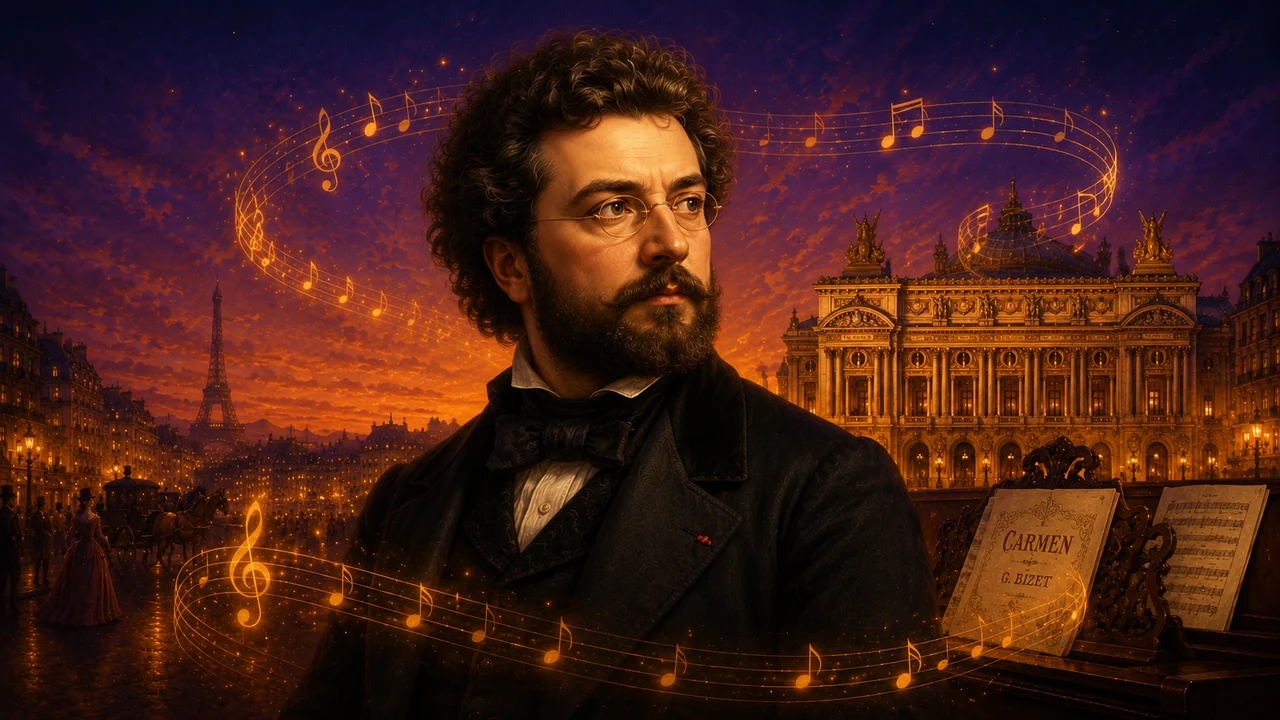
Life and Story
Georges Bizet was born in Paris in 1838 into a musical family and entered the Paris Conservatoire before he was ten. He was an exceptionally talented student and won the prestigious Prix de Rome in 1857. Bizet worked mainly in opera, a difficult field in which new works depended on theaters, singers and public taste. His opera Carmen premiered in Paris in 1875 and initially received a mixed response because of its realism and unconventional heroine. Bizet died only three months later at the age of thirty-six and never witnessed the enormous international success Carmen soon achieved. He also wrote the Symphony in C as a teenager, the orchestral suite L’Arlésienne and piano works including Jeux d’enfants. His music reveals an instinct for clear dramatic pacing, memorable melody and bright orchestral color.
Musical Style
Direct melody, dance rhythm and colorful orchestration are central. His theatrical writing moves efficiently from one character or mood to another without losing momentum.
Why Are They Important?
Carmen became one of the most performed operas in the world and influenced later ideas about realism, character and musical drama.
Why Study This Composer?
Bizet helps students hear rhythm, character and dramatic contrast. Arrangements of Carmen melodies and Jeux d’enfants can make orchestral and operatic ideas accessible at the piano.
What Can a Student Learn?
Students learn to give rhythm a specific character, shape memorable melodies and recognize how repeated themes can identify a person or situation.
Era and Contemporaries
Bizet worked in nineteenth-century Paris during a period of intense operatic culture. His life overlapped with Saint-Saëns and the generation before Debussy.
What to Listen For
In Carmen, compare the marching rhythm of the Toreador music with the smoother Habanera. Ask how meter and accompaniment immediately change the personality of the scene.
Memorable Facts
Featured Works
This section lists important works for reference. A score link appears only when Gamurland has completed both rights and score verification for that work.