
Pyotr Ilyich Tchaikovsky
Pyotr Ilyich Tchaikovsky combined memorable melody, vivid orchestral color and deep emotion in ballets, symphonies, concertos and piano works loved around the world.
Tchaikovsky could turn a simple melody into a complete dramatic scene.
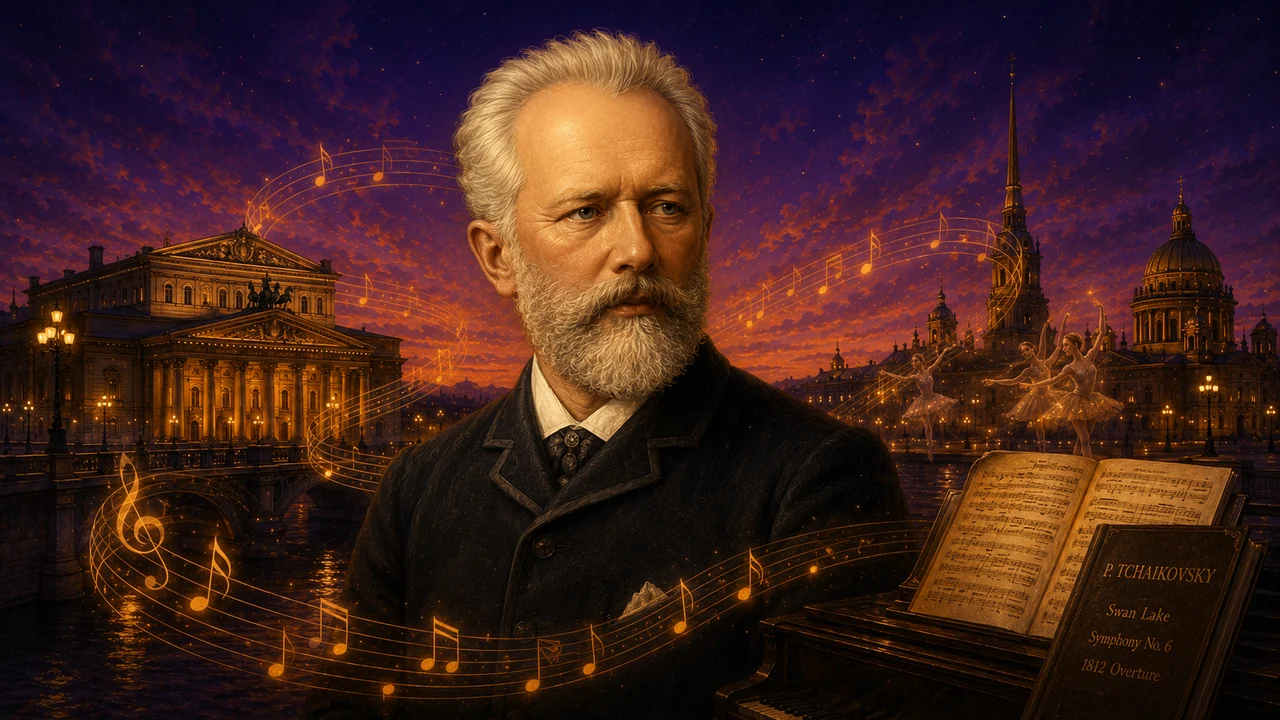
Life and Story
Pyotr Ilyich Tchaikovsky was born in Votkinsk, Russia, in 1840. Although he showed musical sensitivity from childhood, his family initially prepared him for a civil-service career. As a young adult he entered the newly founded Saint Petersburg Conservatory and later taught at the Moscow Conservatory. Tchaikovsky developed a style that combined Russian musical elements with forms and techniques from Western European concert music. His ballets Swan Lake, The Sleeping Beauty and The Nutcracker became landmarks of the repertoire, while his symphonies and concertos established him internationally. He also wrote smaller works useful to students, including Album for the Young and The Seasons. Tchaikovsky conducted his music in Europe and the United States and died in Saint Petersburg in 1893.
Musical Style
Broad melodies, rich harmony, dance rhythms and colorful orchestration are central. He often builds long climaxes by repeating and intensifying material. Ballet music reveals a strong sense of movement and character.
Why Are They Important?
Tchaikovsky became one of the first Russian composers with a lasting international concert reputation and created some of the most performed ballet scores in history.
Why Study This Composer?
Tchaikovsky helps students develop long melodic lines, dynamic shaping and emotional contrast. His easier piano pieces introduce Romantic expression without requiring the largest virtuoso technique.
What Can a Student Learn?
Students learn to make melody sing, plan crescendos across several phrases and distinguish accompaniment from the main musical line. His dance music also strengthens rhythmic character.
Era and Contemporaries
He belonged to the nineteenth-century Russian Romantic world but followed a conservatory-based path distinct from the nationalist group known as The Five.
What to Listen For
In The Nutcracker, notice how each dance receives a different rhythm, instrument color and character. In a symphony, listen for the return of a memorable theme in a new emotional setting.
Memorable Facts
Featured Works
This section lists important works for reference. A score link appears only when Gamurland has completed both rights and score verification for that work.