
Antonín Dvořák
Antonín Dvořák combined strong Classical craftsmanship with Czech musical identity and a gift for memorable melody in symphonies, chamber music and dances.
Dvořák could make a large symphony feel close to folk song and dance.
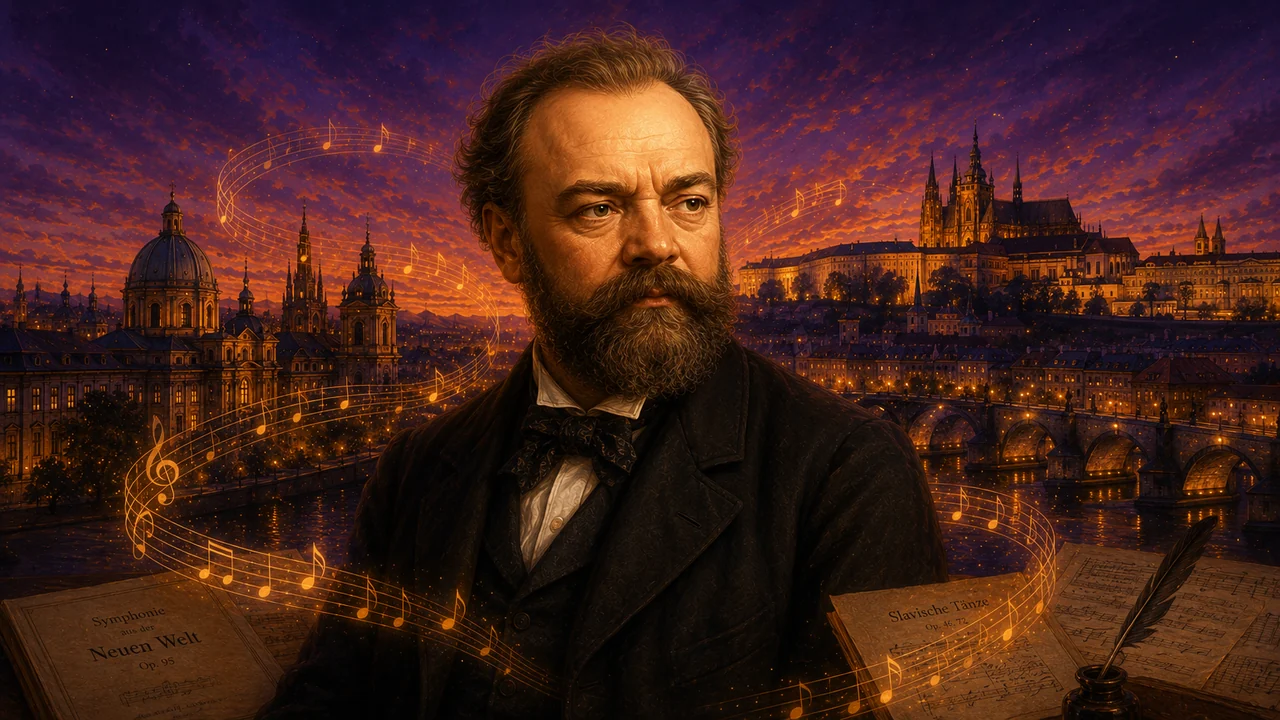
Life and Story
Antonín Dvořák was born in Nelahozeves, Bohemia, in 1841. He trained as an organist and worked for years as an orchestral violist while composing in relative obscurity. Support from Johannes Brahms and publisher Fritz Simrock helped bring his music to wider attention, especially after the success of the Slavonic Dances. Dvořák wrote symphonies, chamber music, operas, sacred works and concertos. From 1892 to 1895 he lived in the United States as director of the National Conservatory of Music in New York. During this period he composed the Symphony No. 9 From the New World and other important works. He encouraged American composers to study musical traditions present in their own country rather than simply imitate Europe. Dvořák later returned to Prague and directed the Prague Conservatory. He died in 1904.
Musical Style
Folk-inspired rhythms, warm melody and energetic contrasts appear throughout his music. He used Classical forms confidently while allowing dance patterns and distinctive melodic turns to shape the surface.
Why Are They Important?
Dvořák became a leading Czech composer with international influence and an important voice in discussions of national identity in concert music.
Why Study This Composer?
Dvořák teaches rhythmic character, phrase momentum and ensemble listening. His dances and lyrical themes make large forms easier to follow.
What Can a Student Learn?
Students learn to keep dance rhythms buoyant, identify recurring themes and hear how accompaniment patterns support melodic character.
Era and Contemporaries
Dvořák belongs to the late Romantic era and was supported early in his career by Brahms. His years in the United States broadened his international impact.
What to Listen For
In the New World Symphony, listen for themes that return in different movements. In a Slavonic Dance, focus on accent patterns and how they create motion.
Memorable Facts
Featured Works
This section lists important works for reference. A score link appears only when Gamurland has completed both rights and score verification for that work.