
Christoph Willibald Gluck
Christoph Willibald Gluck became famous for reforming opera, arguing that music, singing, orchestra and dance should serve the drama rather than exist mainly as opportunities for vocal display.
For Gluck, the central question was not “How difficult can the singer’s part be?” but “How clearly does the music tell the story?”
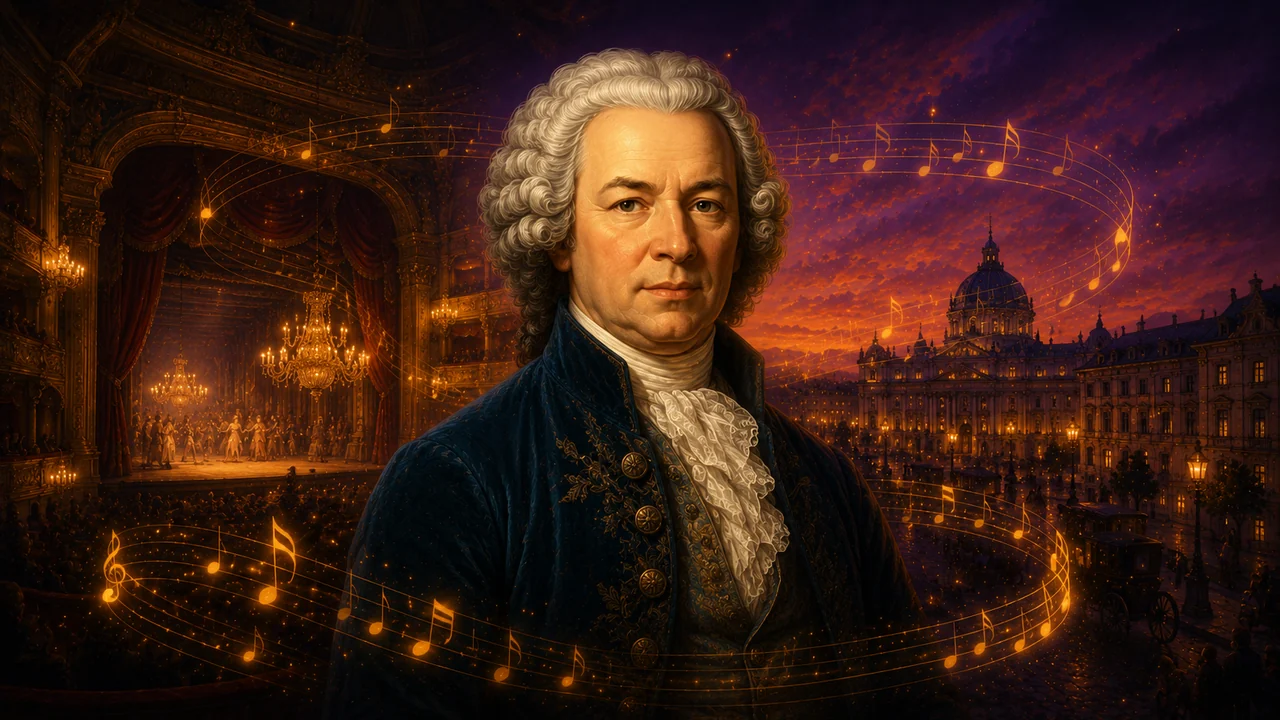
Life and Story
Christoph Willibald Gluck was born in 1714 in the German-speaking lands of Central Europe. He worked in Prague, Vienna and Italy and learned the established Italian opera seria tradition. Over time he became dissatisfied with operas in which elaborate arias and star singers could interrupt the dramatic flow. Working with librettist Ranieri de’ Calzabigi, Gluck developed a more direct style in works such as Orfeo ed Euridice. Chorus, orchestra, dance and solo singing were organized to support the dramatic whole. He later worked in Paris, adapting his ideas to French operatic traditions and producing works including Iphigénie en Tauride and Armide. Gluck died in Vienna in 1787. His reforms helped prepare the ground for Mozart and later dramatic composers.
Musical Style
His reform operas favor direct melody, reduced unnecessary ornamentation and an orchestra that actively supports the emotional situation. Chorus and dance are integrated into the drama.
Why Are They Important?
Gluck became a symbol of operatic reform by bringing Italian and French traditions together around a stronger idea of dramatic unity.
Why Study This Composer?
Gluck teaches students to hear the relationship between music and story. Melody, orchestra and rhythm become tools for character and dramatic meaning rather than display alone.
What Can a Student Learn?
Students learn to ask why a musical gesture exists: Is it showing grief, motion, tension or celebration? This develops interpretive thinking that applies far beyond opera.
Era and Contemporaries
Gluck lived at the intersection of late Baroque and Classical style. He followed the great Baroque opera tradition but became influential just before Mozart’s mature operas.
What to Listen For
In “Che farò senza Euridice,” notice how direct the melody is. Listen to how the orchestra supports grief without overwhelming the voice.
Memorable Facts
Featured Works
This section lists important works for reference. A score link appears only when Gamurland has completed both rights and score verification for that work.