
Joseph Haydn
Joseph Haydn helped shape the Classical symphony and string quartet, combining clear form with wit, surprise and an extraordinary ability to build large movements from small musical ideas.
Haydn loved to create expectations—and then surprise the listener at exactly the right moment.
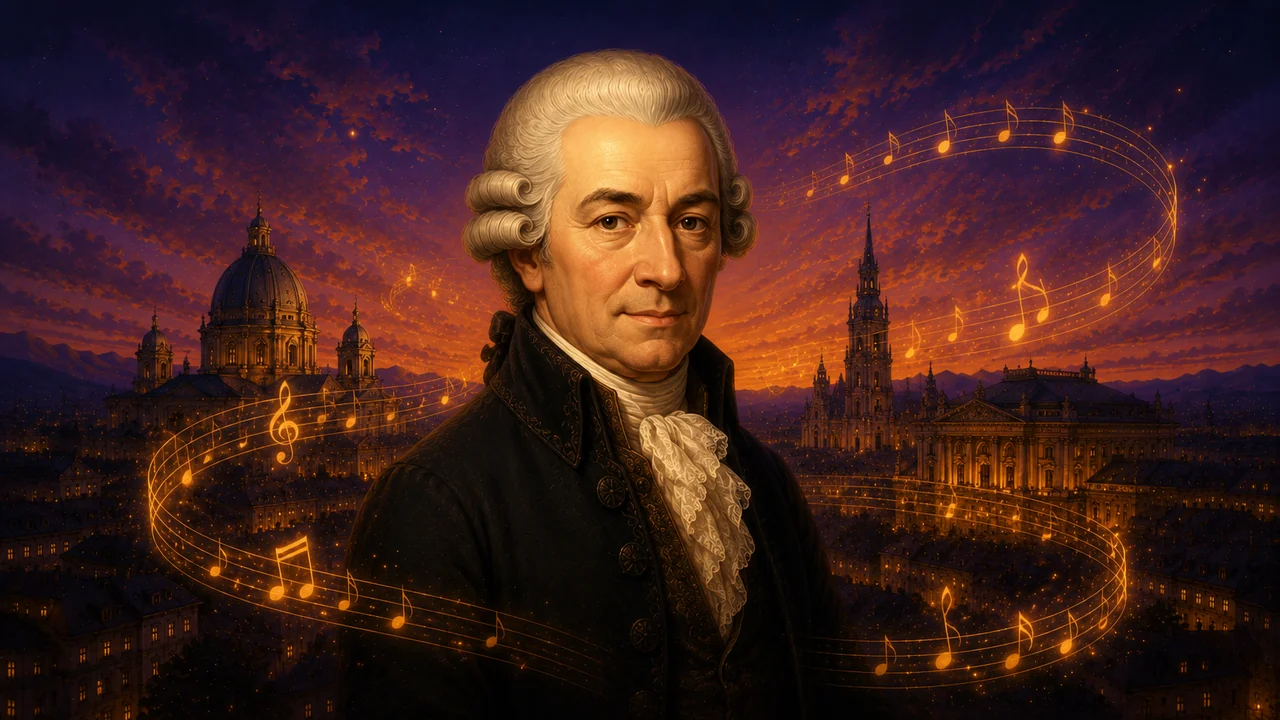
Life and Story
Joseph Haydn was born in Rohrau, Austria, in 1732. As a child he sang in the choir of St Stephen’s Cathedral in Vienna. After his voice changed, he supported himself through teaching, performing and composition. A major turning point came when he entered the service of the wealthy Esterházy family. For roughly three decades he directed musicians and wrote symphonies, chamber music, operas and music for court events. The relative isolation of this position gave Haydn unusual freedom to experiment. Later in life he travelled to London, where his final group of symphonies became major public successes. Haydn had a close artistic friendship with Mozart and briefly taught the young Beethoven. He died in Vienna in 1809. His more than one hundred symphonies and many string quartets form a central part of Classical repertoire.
Musical Style
Haydn’s style is clear and economical. Tiny rhythmic or melodic ideas can become the material for an entire movement. Unexpected pauses, false endings and sudden dynamics are common tools of musical humor. Folk-like tunes and dance rhythms also appear frequently.
Why Are They Important?
Haydn did not invent the symphony or string quartet by himself, but he developed both genres with such variety and skill that he became a major model for later composers.
Why Study This Composer?
Haydn teaches students how four- and eight-bar phrases work, how motives develop and how form creates expectations. His humor also encourages active listening.
What Can a Student Learn?
Students learn to hear themes returning, recognize cadences and play Classical articulation with clarity. Identifying where Haydn deliberately delays or surprises a cadence makes form much easier to understand.
Era and Contemporaries
Haydn stands at the center of the Classical era. Mozart was his younger friend and colleague, while Beethoven belonged to the next generation. His career also spans the shift from court-centered music toward a broader public concert culture.
What to Listen For
In the Surprise Symphony, listen for the famous unexpected loud chord in the slow movement. Then look for other moments in Haydn where a pause, repeat or sudden dynamic plays with what you expected to hear.
Memorable Facts
Featured Works
This section lists important works for reference. A score link appears only when Gamurland has completed both rights and score verification for that work.