
Wolfgang Amadeus Mozart
Wolfgang Amadeus Mozart was one of the defining composers of the Classical era, creating enduring operas, symphonies, concertos and chamber works after beginning his public career as a remarkable child musician.
Mozart can sound effortless at first; careful listening reveals extraordinary balance, drama and detail underneath.
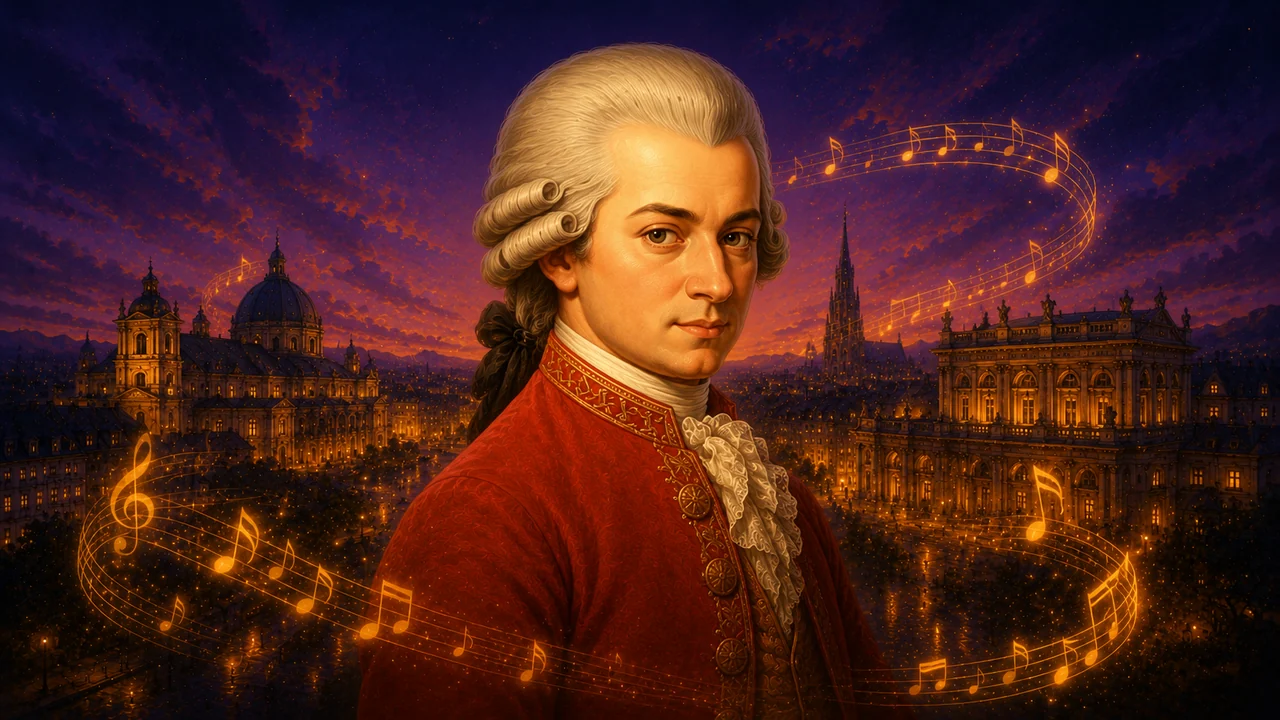
Life and Story
Wolfgang Amadeus Mozart was born in Salzburg in 1756. His father Leopold was a violinist, composer and teacher who recognized the abilities of Wolfgang and his sister Maria Anna at an early age. The children travelled across Europe performing for courts and public audiences, giving Mozart direct contact with many national musical styles. As a young adult he worked in Salzburg but wanted greater independence and moved to Vienna in 1781. There he built a career as a pianist, teacher and freelance composer. His mature operas—including The Marriage of Figaro, Don Giovanni and The Magic Flute—give individual musical personalities to characters and ensembles. His piano concertos, symphonies and chamber music show the balance and formal clarity associated with the Classical era while still containing constant dramatic surprise. Mozart died in Vienna in 1791 at the age of thirty-five. Despite his short life, he left hundreds of works ranging from student-friendly pieces and themes to the most demanding professional repertoire.
Musical Style
Clear melody, balanced phrases and strong formal design are central to Mozart’s style. Accompaniments often look simple but must stay light and active. Operatic thinking also influences his instrumental music: contrasting ideas can feel like different characters in conversation.
Why Are They Important?
Mozart helped establish lasting models in opera, concerto, symphony and chamber music. Together with Haydn and Beethoven, he stands at the center of the Viennese Classical tradition.
Why Study This Composer?
Mozart develops clean articulation, rhythmic precision, phrase balance and the ability to project melody over accompaniment. Because the texture is often transparent, uneven rhythm or heavy touch is difficult to hide.
What Can a Student Learn?
Students learn that not every note should have equal weight. Phrase direction, melody projection, light accompaniment and controlled articulation are essential. Mozart is an excellent test of musical discipline rather than raw force.
Era and Contemporaries
Mozart developed a close artistic friendship with Haydn and studied his quartets carefully. The young Beethoven belonged to the next Viennese generation. Classical music valued clarity and proportion, but Mozart constantly found ways to make that structure dramatic.
What to Listen For
Find the main melody and try to sing it. Then listen again to how the accompaniment supports it without becoming heavy. In an opera ensemble, notice how several characters can sing at once while each retains a different emotional identity.
Memorable Facts
Featured Works
This section lists important works for reference. A score link appears only when Gamurland has completed both rights and score verification for that work.