
Luigi Boccherini
Luigi Boccherini was an Italian Classical composer and virtuoso cellist whose chamber music gave the cello a more melodic role and brought a distinctive Spanish color into the Classical style.
In Boccherini, the cello is not only a bass instrument—it can step forward and become one of the leading voices.
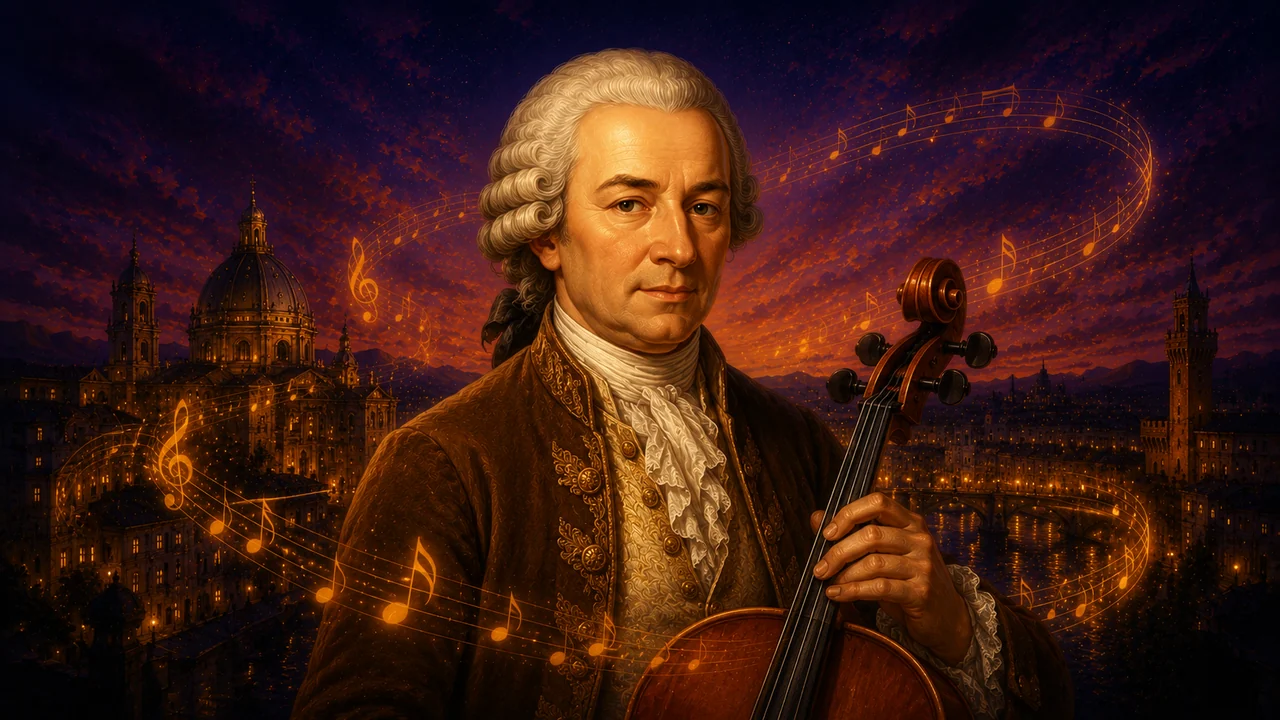
Life and Story
Luigi Boccherini was born in Lucca in 1743. His father was a double bassist, and Boccherini trained as a cellist from an early age. He performed in Italy and Vienna before touring with violinist Filippo Manfredi. A major part of his career unfolded in Spain, where he worked for the Infante Don Luis and other patrons. Boccherini wrote a very large amount of chamber music, especially string quintets. He frequently used an ensemble with two cellos, allowing his own instrument to take a more active melodic and technical role. Spanish dance and guitar-like color appear in several works. His famous Minuet is a movement from the String Quintet Op. 11 No. 5. Boccherini died in Madrid in 1805.
Musical Style
His music favors refined melody, subtle dynamics and warm string color. Cello lines often rise out of the bass register and join the upper voices. Spanish dance and guitar effects can add a distinctive rhythmic flavor.
Why Are They Important?
Boccherini broadened the role of the cello in chamber music and created an unusually large string-quintet repertoire. He represents a Classical tradition shaped by Italy and Spain rather than Vienna alone.
Why Study This Composer?
Boccherini is valuable for elegant phrasing, dance pulse and ensemble listening. The famous Minuet offers students a clear study in Classical grace and three-beat movement.
What Can a Student Learn?
Students learn that elegant playing still requires a steady pulse. They can practice light articulation, phrase endings and listening across ensemble layers.
Era and Contemporaries
Boccherini lived in Haydn’s Classical era but spent much of his career around Madrid. This gave his music a different color from the central Viennese tradition.
What to Listen For
In the famous Minuet, feel the three-beat dance pulse without making it heavy. In string quintets, listen for moments when the cello moves from bass support into a clearly melodic role.
Memorable Facts
Featured Works
This section lists important works for reference. A score link appears only when Gamurland has completed both rights and score verification for that work.