
Maurice Ravel
Maurice Ravel combined extraordinary precision with brilliant color, writing piano and orchestral music in which every detail of rhythm, register and instrumentation seems carefully placed.
Ravel’s music can sound magical, but the magic is built with remarkable technical precision.
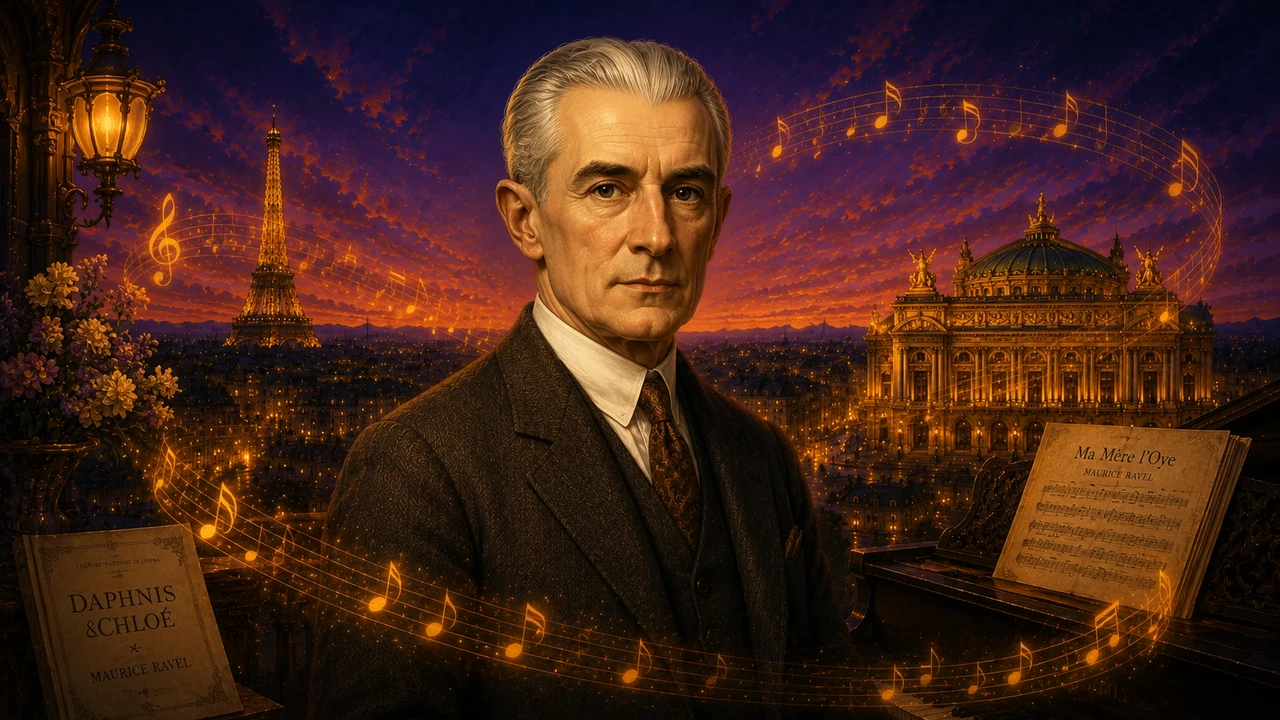
Life and Story
Maurice Ravel was born in Ciboure, France, in 1875 and grew up in Paris. He studied at the Paris Conservatoire, where his originality sometimes brought him into conflict with conservative academic expectations. Ravel wrote piano music, chamber works, songs, ballet and orchestral scores. He admired precise craftsmanship and was a master orchestrator, famously transforming Mussorgsky’s Pictures at an Exhibition into one of the most popular orchestral arrangements in the repertoire. Works such as Jeux d’eau, Miroirs, Gaspard de la nuit and the ballet Daphnis et Chloé show his fascination with color and texture. Boléro, built from repeated melody and rhythm with changing orchestration, became his best-known work. Ravel served as a driver during the First World War. His health declined in later years, and he died in Paris in 1937.
Musical Style
Clear forms, sophisticated harmony, dance rhythm and highly detailed textures are common. Ravel often creates color through exact register, articulation and spacing rather than vague pedal effects.
Why Are They Important?
Ravel became one of the great orchestrators and piano composers of the early twentieth century, influencing concert music and later approaches to musical color.
Why Study This Composer?
Ravel helps advanced students refine touch, rhythmic accuracy and color. Easier arrangements can also teach orchestral listening and controlled repetition.
What Can a Student Learn?
Students learn precision, layered dynamics and how repeated material can remain interesting through changing color and articulation.
Era and Contemporaries
Ravel belonged to early twentieth-century French modernism and is often discussed alongside Debussy, though their musical methods and personalities differ significantly.
What to Listen For
In Boléro, focus on what changes even though the rhythm and melody repeat. In a piano work, listen for several distinct sound layers rather than one blended texture.
Memorable Facts
Featured Works
This section lists important works for reference. A score link appears only when Gamurland has completed both rights and score verification for that work.