
Jean-Philippe Rameau
Jean-Philippe Rameau was both a major French Baroque composer and an influential music theorist who tried to explain how harmony and bass relationships organize musical sound.
Rameau did not only compose chords—he wanted to understand why they work.
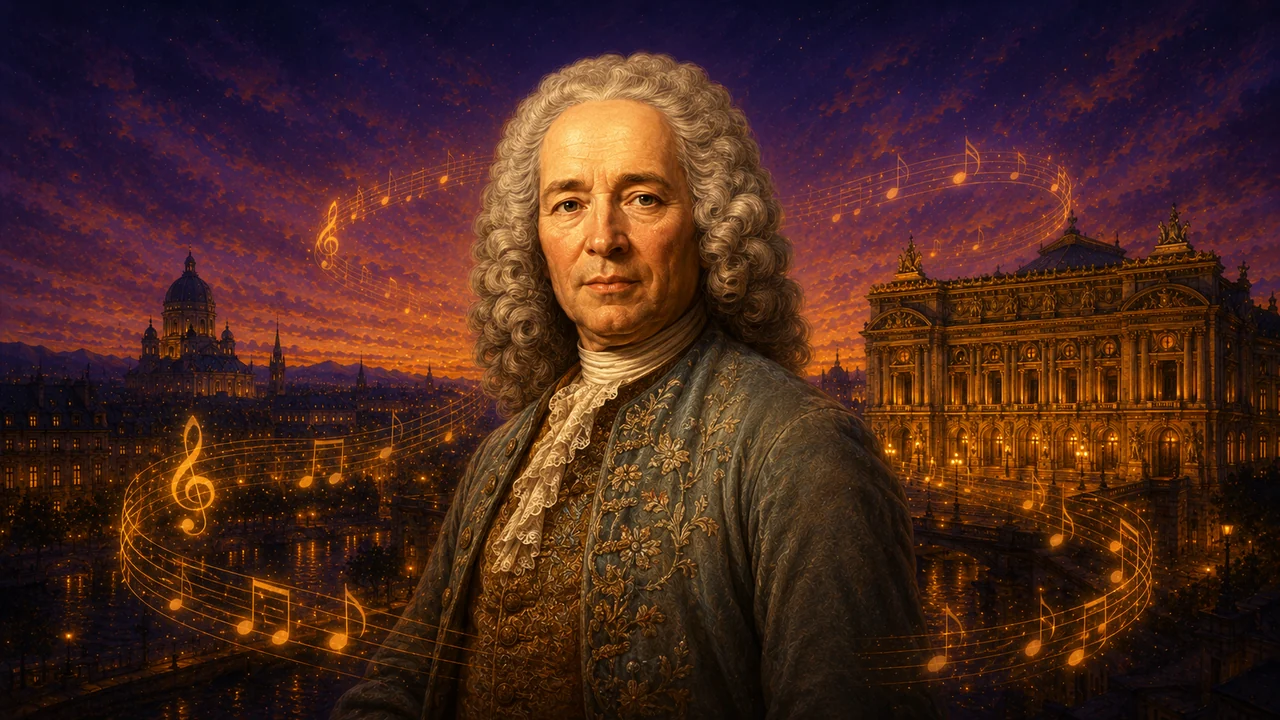
Life and Story
Jean-Philippe Rameau was born in Dijon in 1683. He spent many early years working as an organist in different French cities before establishing himself in Paris. In 1722 he published the Traité de l’harmonie, an important theoretical work that made him famous as a thinker about harmony. Rameau also wrote harpsichord pieces, but his largest public successes came relatively late when he turned to opera. Hippolyte et Aricie, Les Indes galantes and Castor et Pollux brought richer orchestration and bold harmonic writing to the French stage. His operas combine solo singing, chorus, dance and orchestra in elaborate dramatic structures. Rameau died in Paris in 1764. His theoretical ideas remained influential in music education long after his death.
Musical Style
French dance, colorful harmony and vivid musical imagery define much of his style. In harpsichord works he can imitate birds, animals or specific gestures. His operas use the orchestra as an active dramatic force rather than simple accompaniment.
Why Are They Important?
Rameau’s work on harmony was a major step in the history of Western music theory, while his operas renewed the French theatrical tradition after Lully.
Why Study This Composer?
Rameau helps students hear bass movement, chord direction and dance rhythm. His keyboard pieces also develop ornamentation, articulation and strong character playing.
What Can a Student Learn?
Students can listen for how changing bass notes alter the harmony above them. Character pieces also show how a short repeating figure can suggest movement, personality or even an animal.
Era and Contemporaries
Rameau belonged to a later French Baroque generation than Couperin. By the end of his life, lighter Classical styles were beginning to appear, but he continued to develop his own powerful harmonic language.
What to Listen For
Listen to La Poule and notice how a repeated short figure suggests the motion and sound of a hen. In an opera dance, focus on how rhythm and orchestral color immediately change the scene.
Memorable Facts
Featured Works
This section lists important works for reference. A score link appears only when Gamurland has completed both rights and score verification for that work.