
Béla Bartók
Béla Bartók combined modern musical language with the close study of folk traditions, creating rhythmic, energetic and highly original piano, chamber and orchestral music.
Bartók listened to real folk musicians carefully and used what he learned to build a completely modern musical language.
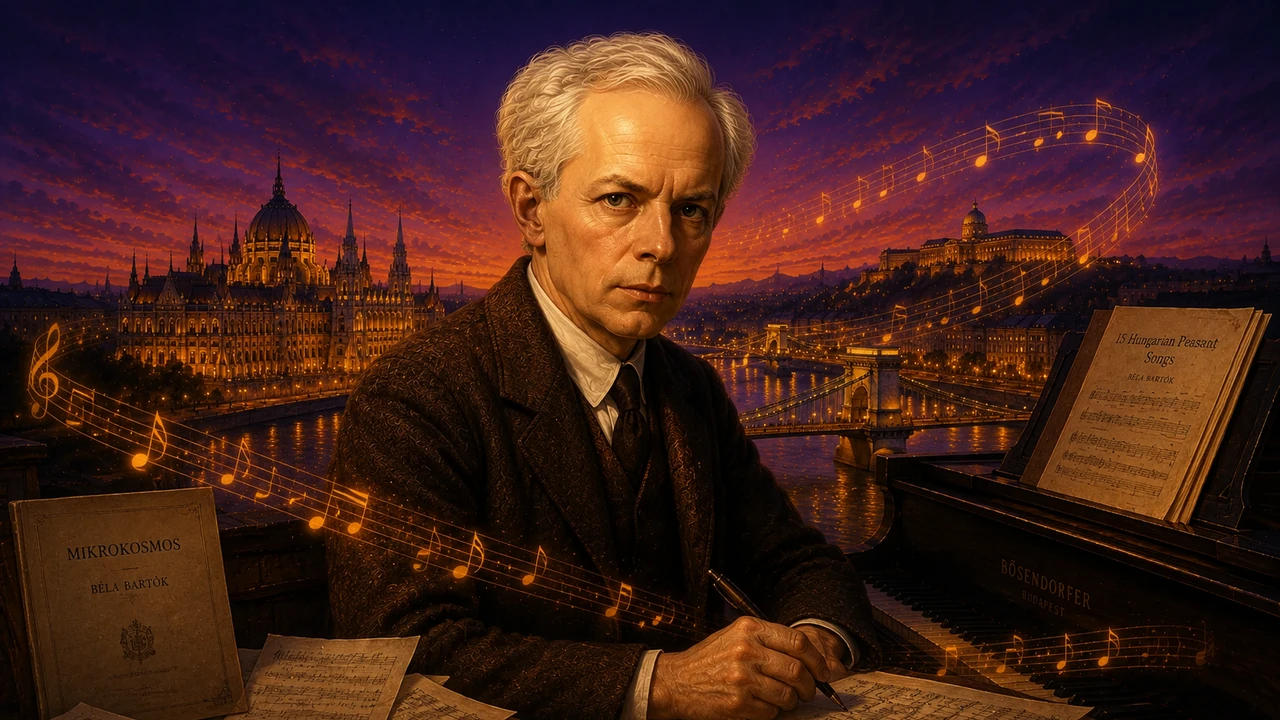
Life and Story
Béla Bartók was born in 1881 in the Kingdom of Hungary. He studied piano and composition in Budapest and became an outstanding pianist. Together with Zoltán Kodály he travelled through villages recording and transcribing folk songs, using early recording technology to document performances. This research changed Bartók’s understanding of rhythm, scale and melody and also made him an important ethnomusicologist. His compositions range from student piano collections to string quartets, concertos and stage works. Mikrokosmos, a set of 153 progressive piano pieces, explores rhythm, coordination and modern harmony from elementary to advanced levels. Bartók opposed fascism and left Hungary for the United States in 1940. He died in New York in 1945.
Musical Style
Irregular meters, strong accents, folk-derived scales, bitonality and percussive piano sounds are common. His music can be fierce, humorous, mysterious or highly lyrical.
Why Are They Important?
Bartók connected serious folk-music research with modern composition and created one of the twentieth century’s most important bodies of educational piano music.
Why Study This Composer?
Bartók is exceptionally useful for rhythm, hand independence, unusual scales and modern articulation. Mikrokosmos allows students to meet these ideas gradually.
What Can a Student Learn?
Students learn precise rhythm, independence between hands and comfort with sounds outside ordinary major-minor harmony. They also learn to treat folk music as a subject for careful listening rather than decoration.
Era and Contemporaries
Bartók belongs to early twentieth-century modernism and worked at the same time as Stravinsky and other composers reshaping rhythm and harmony.
What to Listen For
In a Mikrokosmos piece, identify the repeated rhythmic cell before focusing on notes. Clap each hand separately, then listen for how the two patterns fit together.
Memorable Facts
Featured Works
This section lists important works for reference. A score link appears only when Gamurland has completed both rights and score verification for that work.