
Erik Satie
Erik Satie created spare, witty and atmospheric piano music that challenged Romantic excess and helped open new directions in twentieth-century French music.
Satie showed that a few carefully chosen notes can create an unforgettable atmosphere.
Life and Story
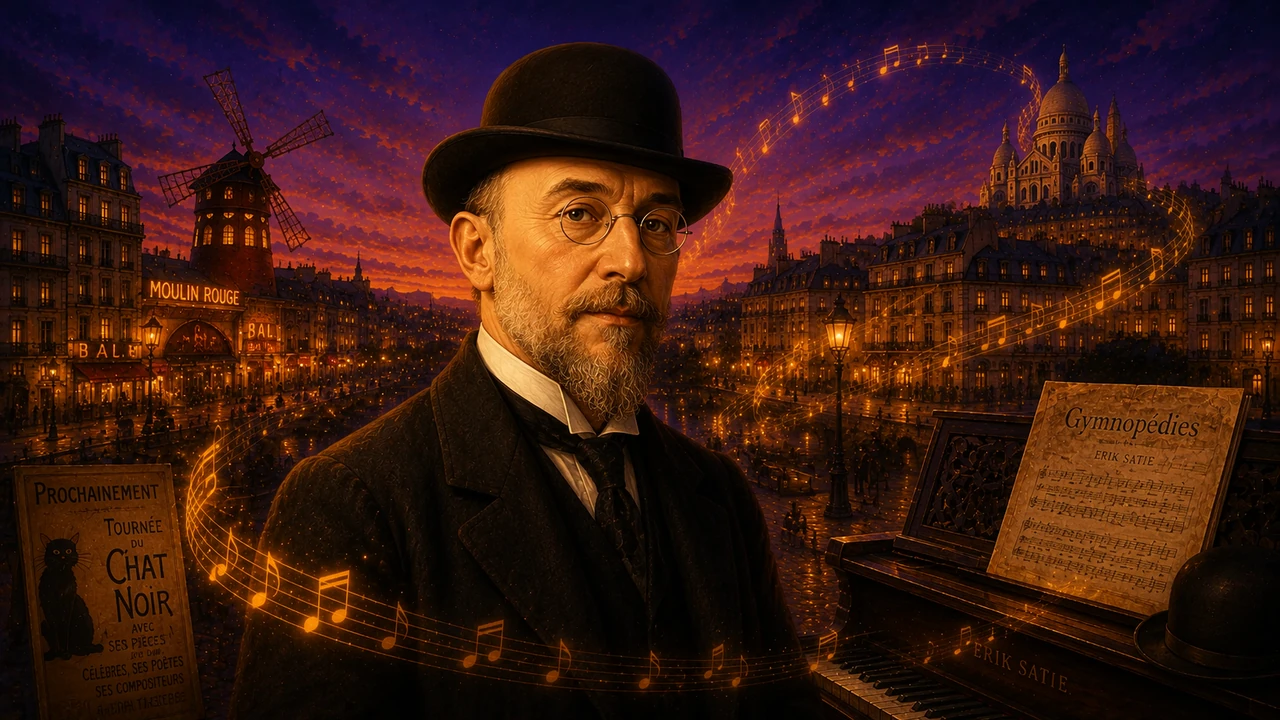
Erik Satie was born in Honfleur, France, in 1866 and later moved to Paris. His musical education was unconventional, and he often stood apart from academic institutions and established concert expectations. He played piano in cafés and cabarets, associated with artists and writers and developed a deliberately individual public personality. Early piano works such as the Gymnopédies and Gnossiennes use slow pacing, unusual chord movement and simple-looking textures that require sensitive control. Later works could be humorous, absurd or experimental in their titles and instructions. Satie eventually returned to formal study at the Schola Cantorum in his forties. Younger composers admired his independence, and he became connected with artistic circles around Cocteau and the group later known as Les Six. He died in Paris in 1925.
Musical Style
Open textures, repeated chords, modal color and deliberately restrained melody are common. Some works avoid traditional dramatic development and instead create a stable, suspended mood.
Why Are They Important?
Satie challenged assumptions about what serious music needed to sound like and influenced later French modernism, minimal approaches and experimental attitudes.
Why Study This Composer?
Satie is excellent for tone quality, pedal, balance and patience. The notes may look simple, but sustaining calm pulse and atmosphere requires careful listening.
What Can a Student Learn?
Students learn that soft music still needs control, that rests and resonance matter and that simplicity can expose every imbalance in touch or pedal.
Era and Contemporaries
Satie worked in Paris across the transition from late Romanticism to modernism, overlapping with Debussy and Ravel while following a very different artistic path.
What to Listen For
In Gymnopédie No. 1, listen to the distance between bass notes, chords and melody. Notice how pedal can connect the sound without making the harmony cloudy.
Memorable Facts
Featured Works
This section lists important works for reference. A score link appears only when Gamurland has completed both rights and score verification for that work.