
Antonio Vivaldi
Antonio Vivaldi was one of the most energetic voices of the Baroque era, known for strong rhythmic patterns, memorable melodies and hundreds of concertos, including The Four Seasons.
Birdsong, storms and winter wind can all become musical gestures in Vivaldi’s vivid sound world.
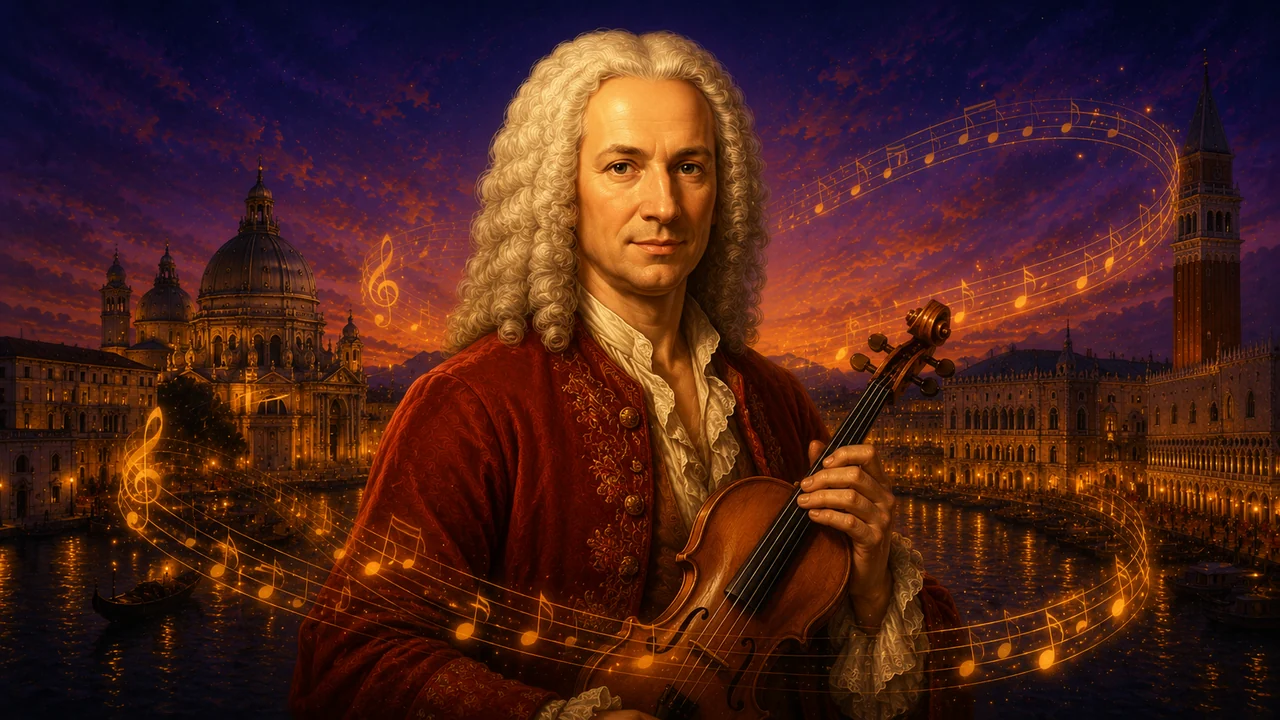
Life and Story
Antonio Vivaldi was born in Venice in 1678. His father was a professional violinist, and Vivaldi became an accomplished violinist himself. He trained for the priesthood and became known as the “Red Priest,” probably because of his red hair, but music occupied most of his professional life. He spent many years teaching and composing for the Ospedale della Pietà, an institution in Venice with a highly skilled female music ensemble. This environment encouraged him to write a vast number of concertos for different instruments. Vivaldi also worked in opera and became known beyond Italy. His concerto writing helped establish a fast-slow-fast three-movement pattern that became highly influential. The Four Seasons is a set of four violin concertos connected with poems and images of nature. Vivaldi’s popularity declined near the end of his life, and he died in Vienna in 1741. Much of his music was rediscovered and reassessed in the twentieth century, and today he is one of the most frequently performed Baroque composers.
Musical Style
His music often uses driving rhythms, clear tonal plans and short ideas that return in recognizable ways. In many concertos a recurring orchestral idea alternates with more adventurous solo episodes. Slow movements tend to be lyrical, while fast movements can feel almost motor-driven.
Why Are They Important?
Vivaldi was crucial to the development of the concerto. His models were studied by composers including Johann Sebastian Bach, and his treatment of solo instruments helped shape concerto writing for later generations.
Why Study This Composer?
Vivaldi is excellent for studying steady pulse, repeated rhythmic patterns, fast note groups and contrasts between solo and ensemble. His clear characters make form easier for young listeners to recognize.
What Can a Student Learn?
Students learn to maintain pulse through fast passages, recognize returning themes and shape clear contrasts. His music is also a useful introduction to program music, where sounds can suggest scenes and events.
Era and Contemporaries
Vivaldi shared the Baroque world with Bach, Handel and Telemann. Venice was an important center for opera and instrumental music, and Italian concerto style was spreading rapidly across Europe.
What to Listen For
In The Four Seasons, listen for images suggested by the music: birds in Spring, building tension before the storm in Summer and sharp, shivering gestures in Winter. Try to identify when the full ensemble returns after a solo episode.
Memorable Facts
Featured Works
This section lists important works for reference. A score link appears only when Gamurland has completed both rights and score verification for that work.