
Arcangelo Corelli
Arcangelo Corelli was a highly influential Italian violinist and composer whose sonatas and concerti grossi helped shape Baroque string technique, ensemble balance and tonal harmony.
Corelli valued beautiful tone, balance and clear musical speech more than empty display.
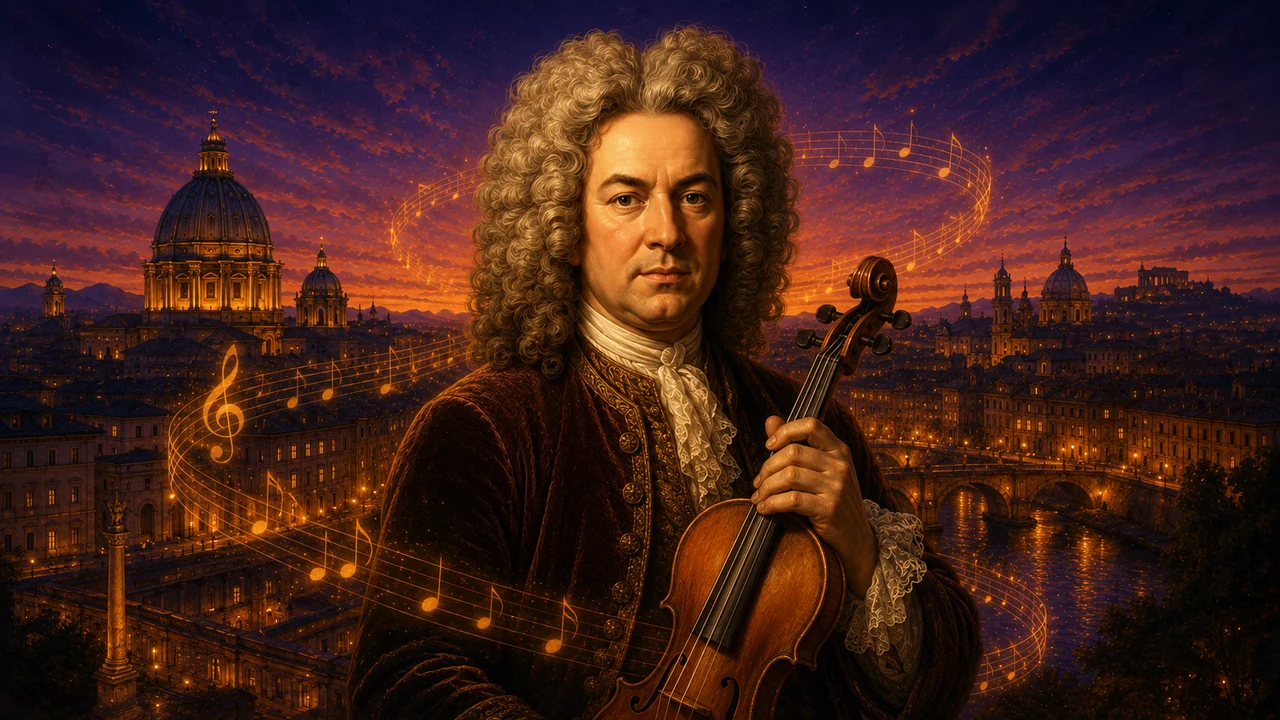
Life and Story
Arcangelo Corelli was born in Fusignano in 1653 and studied violin in Bologna before building his career in Rome. He became a respected violinist, teacher and ensemble leader in aristocratic and church circles. Compared with many major composers, Corelli published a relatively small body of music, but its influence was enormous. His violin sonatas, trio sonatas and Concerti Grossi Op. 6 circulated widely across Europe. His writing established clear models for violin phrasing, harmonic progression and the relationship between a small group of soloists and a larger ensemble. Corelli died in Rome in 1713, and his students and printed works helped spread the Italian string tradition far beyond the city.
Musical Style
His music favors controlled melody and strong harmonic direction. In the concerto grosso, a small concertino group alternates or interacts with the larger ensemble. Slow movements can be highly lyrical, while faster movements use imitation and regular rhythmic motion.
Why Are They Important?
Corelli became a model for later violin and concerto writing. Handel, Vivaldi and many others learned from his approach to string texture and tonal organization.
Why Study This Composer?
Corelli develops balanced phrasing, clean articulation and an understanding of Baroque dance and harmony. Pianists can also benefit from hearing the clarity of bass and upper-line relationships in arrangements.
What Can a Student Learn?
Students learn to shape cadences, hear the difference between solo and accompaniment and value tone quality rather than speed alone.
Era and Contemporaries
Corelli worked in late seventeenth-century Rome, a center of rich musical patronage. His world connected with Alessandro Scarlatti and the young Handel, and his Italian string style spread throughout Europe.
What to Listen For
In a concerto grosso, listen for moments when the full ensemble gives way to a smaller solo group. Compare how the same musical idea changes when the texture becomes larger or more intimate.
Memorable Facts
Featured Works
This section lists important works for reference. A score link appears only when Gamurland has completed both rights and score verification for that work.