
Domenico Scarlatti
Domenico Scarlatti is best known for hundreds of compact keyboard sonatas filled with hand crossings, repeated notes, surprising harmony and the rhythmic influence of Iberian music.
On one keyboard, Scarlatti could suggest guitar strumming, dance rhythms and daring physical movement.
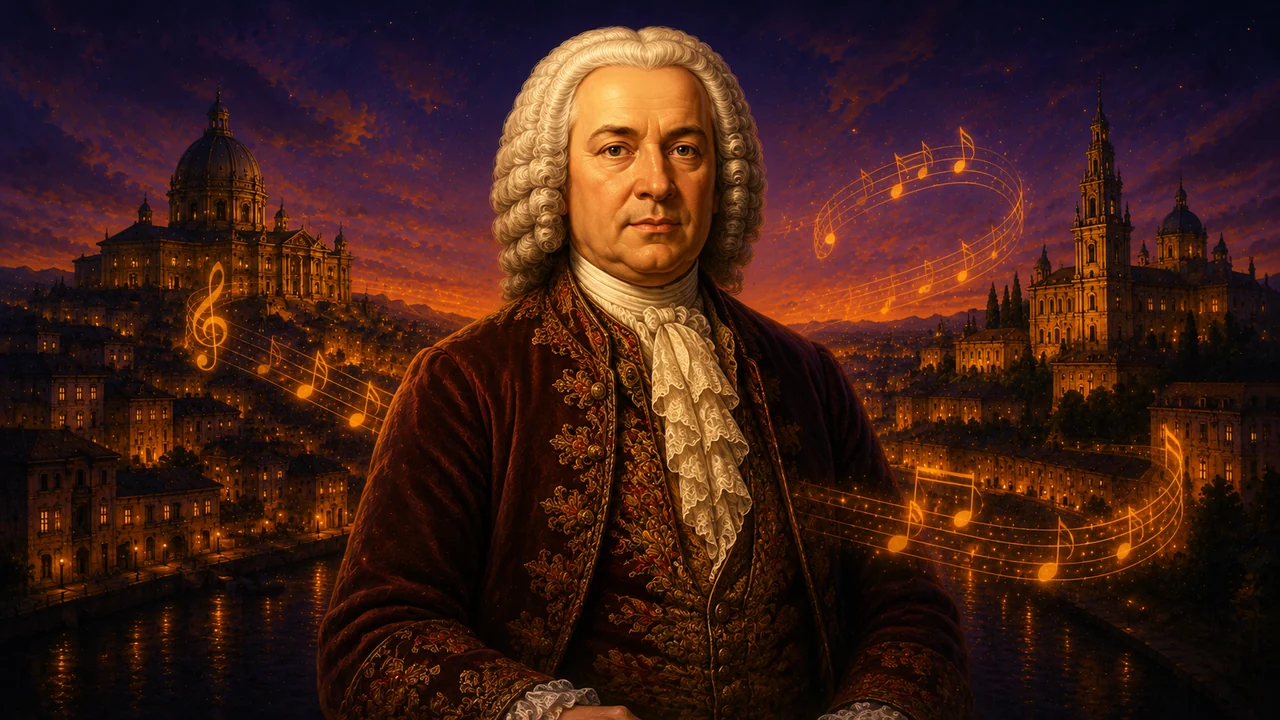
Life and Story
Domenico Scarlatti was born in Naples in 1685, the son of the important opera composer Alessandro Scarlatti. He worked in Italy before entering the service of the Portuguese royal family, where he became music teacher to Princess Maria Barbara. When she later became Queen of Spain, Scarlatti continued his career on the Iberian Peninsula. Today he is remembered above all for roughly 550 keyboard sonatas. Most are single-movement works with a compact two-part design, but within that small form Scarlatti explored remarkable technical and harmonic ideas. His writing includes wide leaps, hand crossings, rapid repeated notes and chord patterns that can resemble Spanish guitar techniques. Dance rhythms and local musical color are part of his distinctive sound. Scarlatti died in Madrid in 1757. His sonatas are now fundamental repertoire for both harpsichordists and pianists.
Musical Style
His style combines sharp rhythm, surprising harmonic turns and physical keyboard gestures. Repeated notes and guitar-like patterns often reflect his long experience in Spain. Many sonatas divide into two repeated halves, making large-scale structure easy to observe.
Why Are They Important?
Scarlatti expanded what keyboard technique could look and feel like. His sonatas do not simply predict later Classical works; they show an unusually free imagination about the keyboard itself.
Why Study This Composer?
Scarlatti is excellent for agility, coordination, hand crossing, crisp articulation and rhythmic character. Easier sonatas help students understand binary form and the transition from Baroque keyboard style toward Classical thinking.
What Can a Student Learn?
Students learn to keep rhythm stable during leaps, organize difficult gestures efficiently and hear how a small motive changes when it moves to new keys. Because the pieces are compact, they are also ideal for learning how to maintain one clear character from beginning to end.
Era and Contemporaries
Scarlatti was born in the same year as Bach and Handel, but his career in Portugal and Spain gave his music a very different cultural color. Iberian dance and guitar traditions became part of his keyboard language.
What to Listen For
Listen for rapid repeated notes, hand-crossing effects and guitar-like rhythms. When a half of the sonata repeats, notice how Scarlatti shifts the same ideas through new keys or adds a new surprise.
Memorable Facts
Featured Works
This section lists important works for reference. A score link appears only when Gamurland has completed both rights and score verification for that work.