
Friedrich Kuhlau
Friedrich Kuhlau is especially important to students for piano sonatinas and flute music that bridge Classical clarity with the stronger dynamics of the early Romantic generation.
Kuhlau’s sonatinas are small musical laboratories that prepare students for larger Classical sonatas.
Life and Story
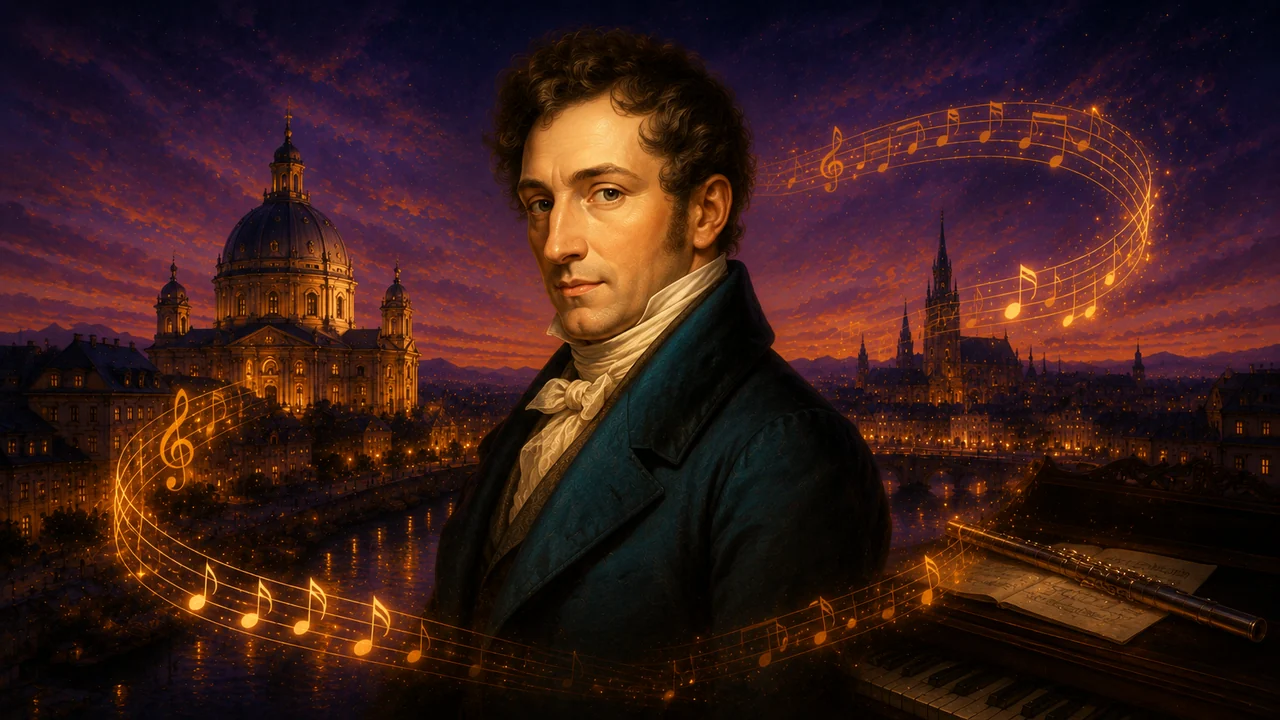
Friedrich Kuhlau was born in Uelzen, Germany, in 1786. A childhood accident left him blind in one eye, but he continued his musical training. During the Napoleonic era he moved to Copenhagen, partly to avoid military conscription, and spent most of the rest of his life in Denmark. He became an important composer in Danish musical life and wrote stage works, piano music and a large amount of flute repertoire. Today he is especially known for sonatinas such as those in Op. 20, Op. 55 and Op. 88. Kuhlau admired Beethoven and studied his music closely. His student pieces combine attractive melodies, Classical form and technical patterns that lead naturally toward more advanced sonata repertoire. Kuhlau died near Copenhagen in 1832.
Musical Style
His piano writing combines Mozart- and Beethoven-influenced Classical form with energetic scales, broken chords and clear cadences. Slow movements tend to be lyrical, while faster movements require clean rhythm and articulation.
Why Are They Important?
Kuhlau’s importance is especially strong in teaching repertoire. His sonatinas create a practical bridge between short beginner pieces and full Classical sonatas.
Why Study This Composer?
Kuhlau is excellent for Classical phrasing, scale and arpeggio passages, left-hand accompaniment and sonatina form. The challenges are clear enough that students can understand exactly what needs improvement.
What Can a Student Learn?
Students learn to separate melody from accompaniment, practice passages in groups and recognize exposition-like returns and cadences. Dynamics keep the music from sounding like a purely mechanical study.
Era and Contemporaries
Kuhlau was born in Germany but built his career in Denmark. He lived in the final Classical and early Romantic period and admired Beethoven’s music deeply.
What to Listen For
Listen for where the main theme returns and where the left-hand pattern changes. Even in fast passages, keep a regular pulse underneath the surface movement.
Memorable Facts
Featured Works
This section lists important works for reference. A score link appears only when Gamurland has completed both rights and score verification for that work.