
Georg Philipp Telemann
Georg Philipp Telemann was one of the most productive and versatile composers of the Baroque era, combining German, French, Italian and Polish influences in a remarkably flexible musical language.
Telemann shows that a composer can learn from many musical cultures without losing a personal voice.
Life and Story
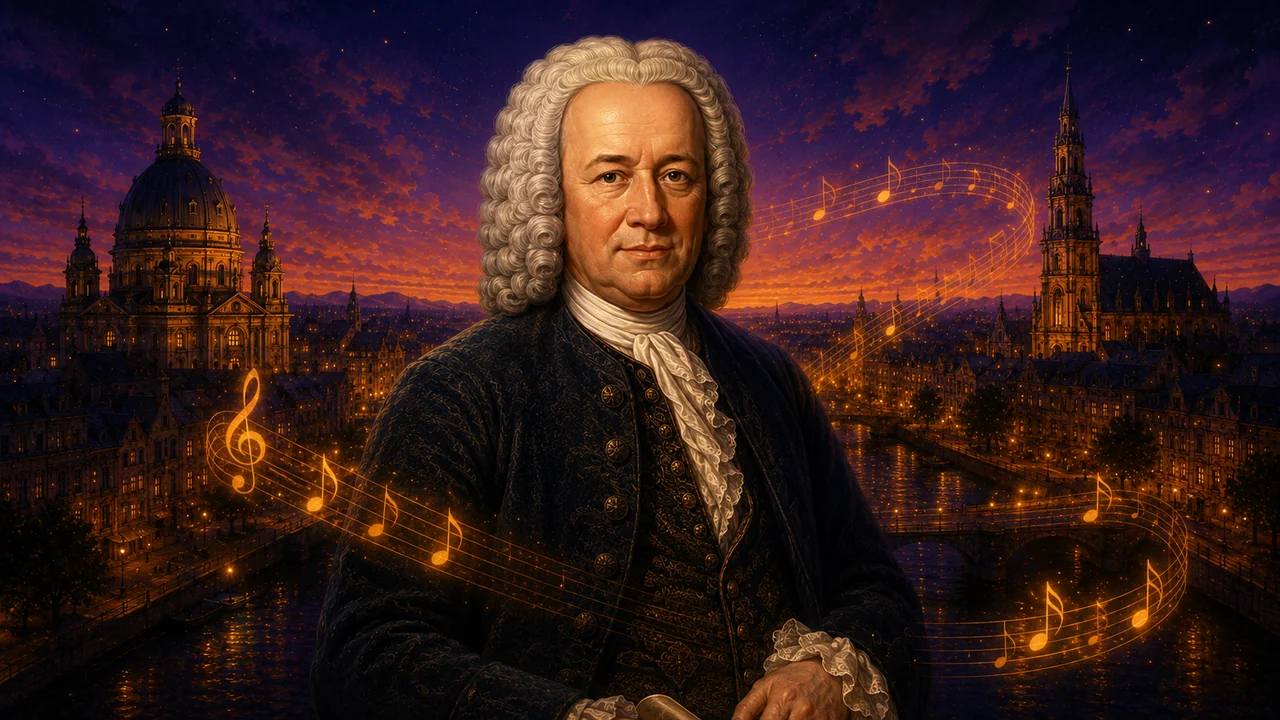
Georg Philipp Telemann was born in Magdeburg in 1681. Although his family preferred a more conventional profession, he developed largely as a self-taught musician and began composing at a young age. He studied law in Leipzig but quickly became deeply involved in the city’s musical life. Later he held important posts in Sorau, Eisenach, Frankfurt and especially Hamburg, where he directed music for churches, public concerts and theatrical events. Telemann was extremely famous during his lifetime and wrote a huge quantity of vocal and instrumental music. He was curious about national styles and absorbed French dances, Italian concerto writing and Polish folk-inspired rhythms. His long life allowed him to witness the shift from high Baroque complexity toward lighter, more Classical styles. He died in Hamburg in 1767.
Musical Style
Variety is a major feature of Telemann’s music. A French-style suite, an Italian-influenced concerto and a Polish-inspired dance can sound very different, yet his melodies are usually clear and his textures remain easy to follow.
Why Are They Important?
Telemann represents the international exchange of musical styles in the early eighteenth century. He also played an important role in public concert culture and music publishing.
Why Study This Composer?
Telemann is useful for recognizing dance styles, articulation and instrumental color. Much of his music is technically approachable enough to introduce Baroque style without overwhelming younger students.
What Can a Student Learn?
Students learn to change character quickly between dance movements, use ornaments naturally and listen to the different roles of instruments in chamber music.
Era and Contemporaries
Telemann was a contemporary of Bach and Handel. Carl Philipp Emanuel Bach was his godson and later succeeded him in an important Hamburg music post.
What to Listen For
Listen to a suite and identify how each dance changes the pulse and character. Notice how the same composer can move from ceremonial music to light, energetic or lyrical styles within a short time.
Memorable Facts
Featured Works
This section lists important works for reference. A score link appears only when Gamurland has completed both rights and score verification for that work.